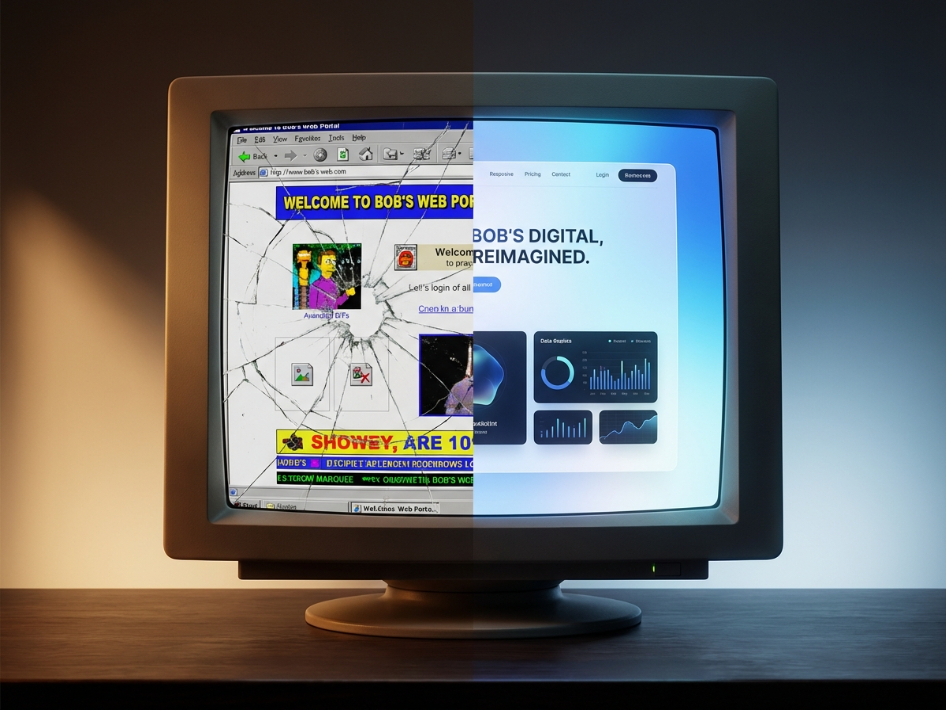
Why Every Business Needs a Mobile-First Website in 2025 (And Why It’s Embarrassing If You Don’t)
It’s 2025. If your customers have to pinch, zoom, or squint to read your "About Us" page on the train, they aren't becoming customers. Here’s why mobile-first isn't an "option" anymore—it's survival.

Let’s be brutally honest for a second. Where is your phone right now?
Is it in your pocket? On the desk next to you? Are you literally reading this article on it while waiting in line for coffee, or perhaps sitting on the toilet? (No judgment, we all do it).
We live on these little glowing rectangles. We shop on them, we research businesses on them, we doom-scroll on them at 2 AM.
Yet, in the futuristic year of 2025, I still stumble across business websites that look absolutely stunning on a 27-inch iMac, but turn into a digital dumpster fire the second I open them on my iPhone.
If you are still treating mobile visitors as second-class citizens, you aren't just leaving money on the table—you're actively shoving it into your competitor's pockets.
It’s time to stop "adapting" to mobile and start putting it first. Here is the tough-love reality check on why your business needs a mobile-first website right now.
The Google God Has Spoken (And It Hates Your Desktop Site)
Let's start with the entity that controls your destiny: Google.
Years ago, Google switched to "mobile-first indexing." In plain English, this means Google predominantly uses the mobile version of your content for indexing and ranking.
Google doesn't care how pretty your video background looks on a desktop monitor. It cares if your site loads fast on 4G and if the text is readable on a 6-inch screen.
If your mobile site is slow, clunky, or just a shrunken-down version of your desktop site, Google notices. And Google will ghost you. You’ll be buried on page 7 of the search results, hanging out with conspiracy theory blogs and websites that haven't been updated since 2013.
Pinch-and-Zoom is the Universal Sign of Failure
Remember browsing the web in 2010? You’d open a site, see microscopic text, pinch your fingers together to zoom in, scroll left to read half a sentence, then scroll right to read the other half.